
Central Blood Pressure vs. Your Arm Cuff: What a Standard Reading Misses
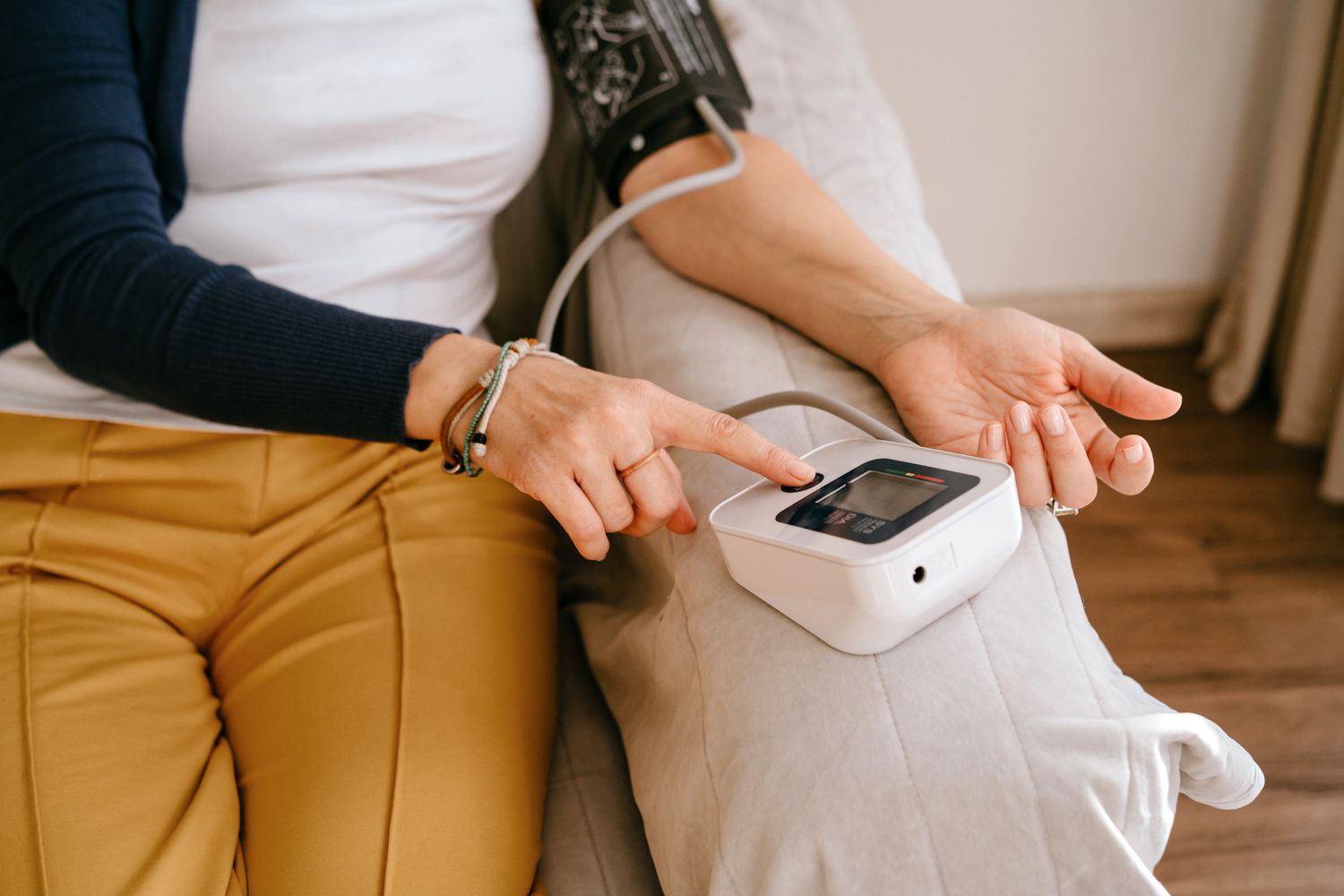
You have had your blood pressure taken dozens of times. A cuff inflates on your upper arm, a number appears, and someone tells you whether it is fine. That number is genuinely useful — decades of evidence support it.
But it is measuring pressure in your arm. The pressure that matters most to your heart, brain, and kidneys is the pressure in your aorta, and those two numbers are not the same. In some people the gap is small. In others it is wide enough to change how their risk should be understood.
Here is what central blood pressure is, what the research does and does not show, and why the difference has become measurable outside a research setting.
The number on the cuff isn't the number your organs feel
When your heart contracts, it ejects blood into the ascending aorta — the large artery leaving the heart. The pressure there is central blood pressure, sometimes written cBP or central aortic pressure. That is the load delivered directly to your heart muscle, your brain, and your kidneys.
By the time that pressure wave reaches your upper arm, it has changed. It travels through progressively narrower, stiffer vessels, and reflected waves bouncing back from the periphery interact with the forward wave. In most healthy adults, systolic pressure measured at the arm is higher than at the aorta. The cuff overestimates what the heart is actually working against — and by an amount that varies from person to person.
That variability is the point. Two people with identical readings of 130/85 can have meaningfully different central pressures.
Pulse pressure amplification: the gap between the two
The ratio between arm pulse pressure and aortic pulse pressure is called pulse pressure amplification (PPA). A large gap is normal and healthy in young people with elastic arteries. As arteries stiffen with age, the gap narrows — the arm reading and the aortic reading converge.
Counter-intuitively, lower amplification is the worse direction. A 2024 individual-participant meta-analysis published in Hypertension Research analysed 5,608 participants from the International Database of Central Arterial Properties for Risk Stratification, followed for a median of 4.1 years. Researchers looked for the threshold at which risk began to rise and found it converged at a PPA of 1.3. Below that threshold, the hazard ratio was 1.54 for cardiovascular endpoints and 2.45 for coronary endpoints (Hypertens Res, 2024).
That is a real signal, and it is invisible to a cuff reading alone — because it is a relationship between two pressures, not a single value.
What arterial stiffness has to do with it
Healthy arteries are elastic. They expand as the heart contracts and recoil as it relaxes, converting a pulsatile ejection into smoother downstream flow. Arterial stiffness is the gradual loss of that elasticity, driven by ageing, atherosclerosis, diabetes, obesity, and other factors.
Stiffness creates a mechanical problem with two parts. Stiff arteries absorb less of each pulse, so the heart generates higher pressure to move the same blood. And reflected pressure waves return to the heart faster — early enough to arrive during contraction rather than relaxation, adding to the peak pressure the heart must overcome. That added pressure is quantified as augmentation pressure (AP), and as a percentage of pulse pressure it is the augmentation index (AIx).
None of this produces symptoms. Arterial stiffening progresses silently for years, which is precisely why a measurable number is useful.
What the research actually shows
This is where it is worth being careful, because arterial stiffness is a field where enthusiasm sometimes outruns evidence.
Central haemodynamics predict cardiovascular events. The most-cited synthesis is a 2010 systematic review and meta-analysis in the European Heart Journal covering 11 longitudinal studies and 5,648 subjects, with mean follow-up of 45 months. The pooled results (Vlachopoulos et al., Eur Heart J 2010;31(15):1865–71):
- Central systolic pressure: relative risk 1.088 (95% CI 1.040–1.139) per 10 mmHg increase
- Central pulse pressure: relative risk 1.137 (95% CI 1.063–1.215) per 10 mmHg increase
- Augmentation index: relative risk 1.318 (95% CI 1.093–1.588) per 10% absolute increase, for cardiovascular events
- Augmentation index and all-cause mortality: relative risk 1.384 (95% CI 1.192–1.606) per 10% increase
And now the honest caveat. In that same analysis, when central pulse pressure was compared head-to-head against ordinary brachial pulse pressure, its predictive advantage was marginal and not statistically significant (P = 0.057). Central pressure is not a wholesale replacement for the cuff. What the analysis did establish is that augmentation index carried independent predictive value beyond peripheral pressure — it tells you something the arm reading does not.
Anyone claiming central pressure is straightforwardly "three times better" than your arm cuff is overstating the literature.
The most striking evidence comes from a drug trial. The CAFE substudy of ASCOT compared two blood-pressure-lowering regimens in 2,073 patients. Both produced nearly identical brachial readings. But central aortic systolic pressure was 4.3 mmHg lower in the amlodipine/perindopril arm, and central pulse pressure 3 mmHg lower. That difference tracked with a 16% reduction in the study's composite cardiovascular outcome (Williams et al., Circulation 2006).
Two treatments. Same arm numbers. Different central pressures, and different outcomes. That is the clearest demonstration that the cuff can miss something clinically meaningful.
Arterial stiffness improves risk prediction. The largest analysis of aortic pulse wave velocity — an individual-participant meta-analysis of 17,635 subjects — found that adding aPWV improved cardiovascular event prediction beyond conventional risk factors, with the greatest reclassification benefit in intermediate-risk individuals (Ben-Shlomo et al., JACC 2014;63(7):636–46). Note this studied pulse wave velocity, a related but distinct measurement — see below.
Vascular age: are your arteries older than you are?
All arteries stiffen with time, but not at the same rate. Faster-than-expected stiffening is accelerated vascular ageing; slower is delayed vascular ageing, and healthier.
Establishing what "expected" means required measuring a lot of healthy people. The Anglo-Cardiff Collaborative Trial (ACCT) screened 10,096 individuals and derived age-stratified reference values for augmentation pressure and augmentation index from 4,001 healthy, normotensive adults aged 18 to 90 (McEniery et al., JACC 2005;46(9):1753–60). It also found the ageing pattern is not linear: augmentation index rises most in younger adults, while aortic pulse wave velocity changes more in older ones.
This is why an isolated stiffness number means little without an age comparison. An AIx of 30% is unremarkable at 60 and notable at 35.
How central blood pressure is measured
Direct measurement requires threading a catheter into the aorta — appropriate during cardiac catheterisation, not for screening. The non-invasive alternative is pulse wave analysis (PWA).
PWA captures the pressure waveform, then applies a validated transfer function to derive the corresponding aortic waveform. From that single measurement you get central systolic and pulse pressure, augmentation pressure and index, pulse pressure amplification, and the subendocardial viability ratio — an estimate of the balance between oxygen supply to the heart muscle and demand placed on it.
The SphygmoCor system is the most widely validated implementation and is used in over 4,500 clinical and research settings. It is the device used in the CAFE study cited above, which is part of why that evidence base exists at all.
Pulse wave analysis vs. pulse wave velocity
These are often conflated and are not the same measurement.
- Pulse wave velocity (PWV) measures how fast the pressure wave travels between two points, typically carotid to femoral. Faster transit means stiffer arteries. It requires sensors at two sites.
- Pulse wave analysis (PWA) analyses the shape and timing of the waveform from a single site and derives central pressures and wave-reflection indices from it.
Both assess arterial stiffness; they are complementary rather than interchangeable. The Ben-Shlomo meta-analysis above concerns PWV. The Vlachopoulos central-haemodynamics findings concern PWA-derived measures. If a physician has specifically requested PWV, confirm which measurement a provider actually performs.
Who should consider measuring it
Reasonable candidates include:
- Adults over 40 establishing a cardiovascular baseline
- Anyone with borderline or elevated readings who wants to understand what is happening centrally
- People with a family history of heart disease or stroke
- Those with diabetes, obesity, or metabolic concerns, all of which accelerate stiffening
- Anyone beginning or adjusting blood-pressure or cholesterol therapy who wants an objective before-and-after
The reclassification data is relevant here: the clearest benefit appeared in people at intermediate risk — those for whom conventional scoring is genuinely uncertain.
Can arterial stiffness improve?
Partly, and this is what makes measuring it worthwhile rather than merely interesting.
Arterial stiffness has both a structural component, which changes slowly, and a functional component reflecting vascular tone, which responds faster. Improvements have been observed with aerobic exercise, sodium reduction, weight loss, and blood-pressure control. The CAFE result demonstrates that pharmacological choices can shift central pressure independently of brachial pressure — a decision for you and your physician.
Because PWA is non-invasive and repeatable, you can re-measure in 6 to 12 months and find out whether what you are doing is working, instead of assuming it is.
What this measurement does not tell you
For balance, because credibility requires it:
- It is not a diagnosis. It is a risk-stratification and tracking tool.
- It does not detect plaque. For that, a coronary artery calcium score, CT angiography, or carotid ultrasound is appropriate.
- It does not replace lipids or metabolic labs. ApoB, Lp(a), hsCRP, and HbA1c measure different things.
- Central pulse pressure was not significantly superior to brachial pulse pressure in the 2010 meta-analysis. The independent signal came from augmentation index.
- Single readings vary. Caffeine, nicotine, recent exercise, and stress all affect vascular tone, which is why preparation instructions exist.
Measuring it in Denver
DexaFit Denver offers arterial stiffness and central blood pressure assessment using SphygmoCor pulse wave analysis. The appointment takes 15–20 minutes, uses a standard arm cuff, requires no referral, and produces a report before you leave, with every value compared against the age-matched reference range. Introductory pricing is $69.
It pairs naturally with DEXA body composition — visceral fat is directly implicated in arterial stiffening — and with VO₂ Max testing, the strongest single predictor of cardiorespiratory fitness.
This article is for educational purposes and is not medical advice, diagnosis, or treatment. Associations reported in observational research do not establish causation. Consult a qualified healthcare provider about your cardiovascular risk.
References
- Vlachopoulos C, et al. Prediction of cardiovascular events and all-cause mortality with central haemodynamics: a systematic review and meta-analysis. Eur Heart J. 2010;31(15):1865–1871. Link
- An outcome-driven threshold for pulse pressure amplification. Hypertens Res. 2024;47:2478–2488. Link · Full text
- Williams B, et al. Differential impact of blood pressure–lowering drugs on central aortic pressure and clinical outcomes: the CAFE study. Circulation. 2006;113(9):1213–1225. Link
- McEniery CM, et al. Normal vascular aging: the Anglo-Cardiff Collaborative Trial (ACCT). J Am Coll Cardiol. 2005;46(9):1753–1760. Link · PubMed
- Ben-Shlomo Y, et al. Aortic pulse wave velocity improves cardiovascular event prediction: individual participant meta-analysis of 17,635 subjects. J Am Coll Cardiol. 2014;63(7):636–646. Link · PubMed
Measure What Your Arm Cuff Misses
Get arterial stiffness and central blood pressure assessment with SphygmoCor pulse wave analysis at DexaFit Denver. 15–20 minutes, no referral, $69 introductory pricing.
Book Your Arterial Health Assessment